


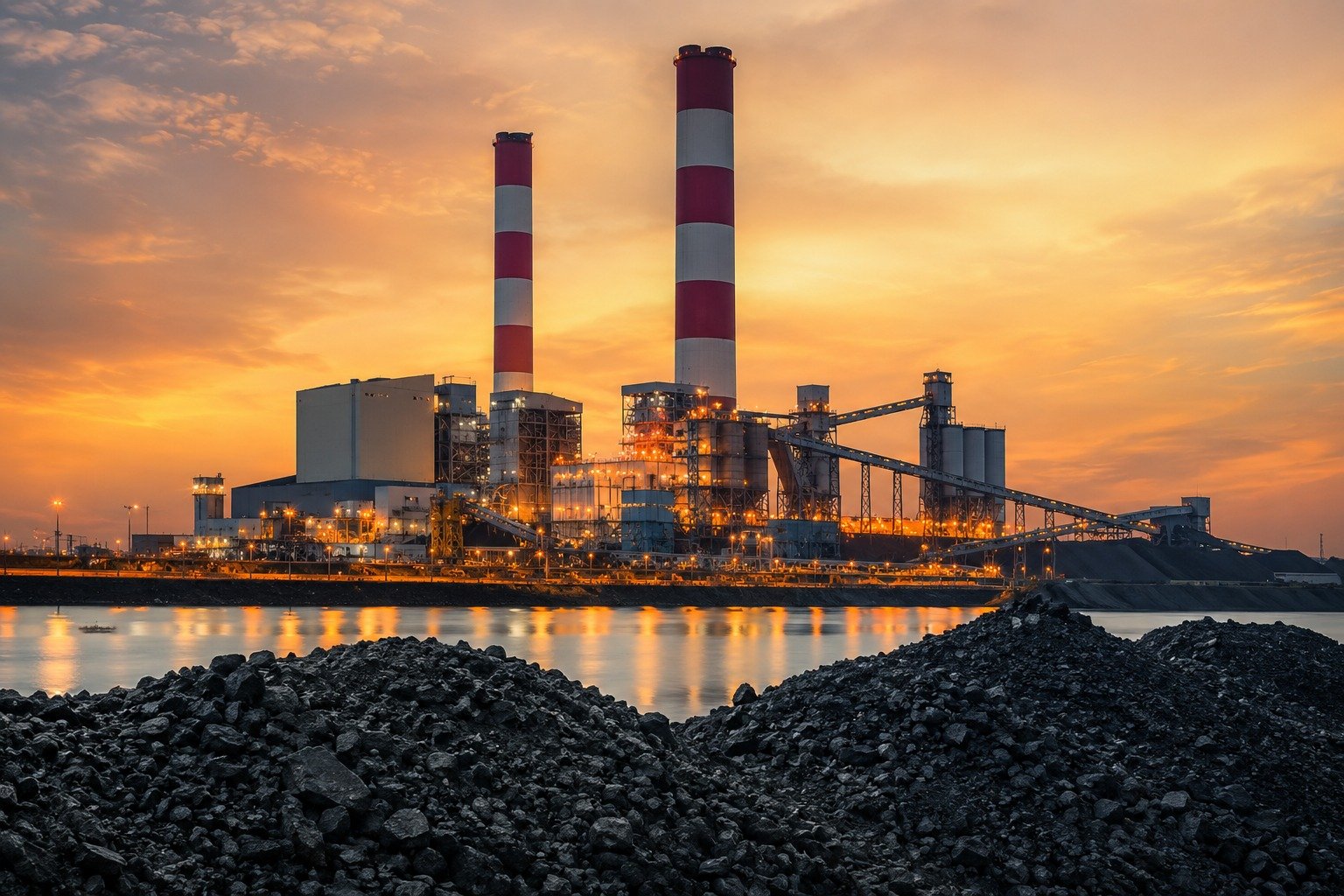
Andhra Pradesh is set to procure 1,600 MW of coal-based thermal power as part of its strategy to meet rising electricity demand and strengthen the State’s long-term energy security.
The Andhra Pradesh Electricity Regulatory Commission (APERC) has granted in-principle approval to the State’s power distribution companies (Discoms) to initiate a competitive bidding process for the proposed capacity. The power will be procured through Tariff-Based Competitive Bidding under Section 63 of the Electricity Act, 2003, using the Design, Build, Finance, Own and Operate model.
The bidding process will follow the standard Request for Qualification, Request for Proposal and Power Supply Agreement documents notified by the Union Ministry of Power.
The proposed 1,600 MW procurement represents the first phase of Andhra Pradesh’s long-term thermal capacity addition programme. The Central Electricity Authority’s Resource Adequacy Plan for Andhra Pradesh has recommended the phased addition of 5,588 MW of thermal power generation capacity by 2035-36. Of this total, 1,600 MW has been identified for the initial phase to address the State’s projected increase in electricity consumption and peak demand.
The procurement is expected to attract power developers seeking long-term supply contracts in Andhra Pradesh, where electricity demand and peak load are forecast to increase significantly over the next decade.
The move comes as Andhra Pradesh continues to expand industrial activity, urban infrastructure and electricity-intensive investments across multiple sectors. The proposed thermal capacity is intended to provide firm and dispatchable power that can support the grid during periods of high demand and when renewable-energy generation is lower.
The additional capacity is also expected to complement the State’s growing renewable-energy portfolio by ensuring reliable electricity availability during evening peaks, seasonal variations and periods when wind and solar generation are unavailable.
APERC has clarified that its approval is limited to allowing the bidding process to commence. It does not amount to approval of the tariff that will be discovered through competitive bidding or the Power Supply Agreements that will subsequently be signed with successful bidders.
Following completion of the bidding process, the Discoms will be required to submit the bid evaluation report, discovered tariff, draft Power Supply Agreements and details of any deviations from the Union Government’s model bidding documents to APERC for further consideration.
The Commission has directed the Discoms to reject bids if the tariffs discovered through the competitive process are not competitive. It has also asked them to ensure that the proposed capacity is preferably connected to the Andhra Pradesh State Transmission Network.
According to APERC, prioritising connectivity to the State transmission system could optimise the utilisation of existing infrastructure and reduce the risks and delays associated with obtaining connectivity through the Inter-State Transmission System.
However, projects connected through the inter-state network may be preferred if the landed cost of power at the Andhra Pradesh boundary is lower than that of generation connected to the State network. This provision keeps the procurement open to both projects located within Andhra Pradesh and competitively priced generation facilities outside the State.
For developers planning new thermal capacity within Andhra Pradesh, connectivity to the State grid could therefore become an important competitive advantage during the bidding process.
The 1,600 MW procurement is expected to emerge as one of the larger long-term thermal power opportunities in the Indian power market. For Andhra Pradesh, the initiative is aimed at securing adequate electricity supplies well ahead of the period when projected demand could place additional pressure on the State’s existing generation and power procurement portfolio.
