



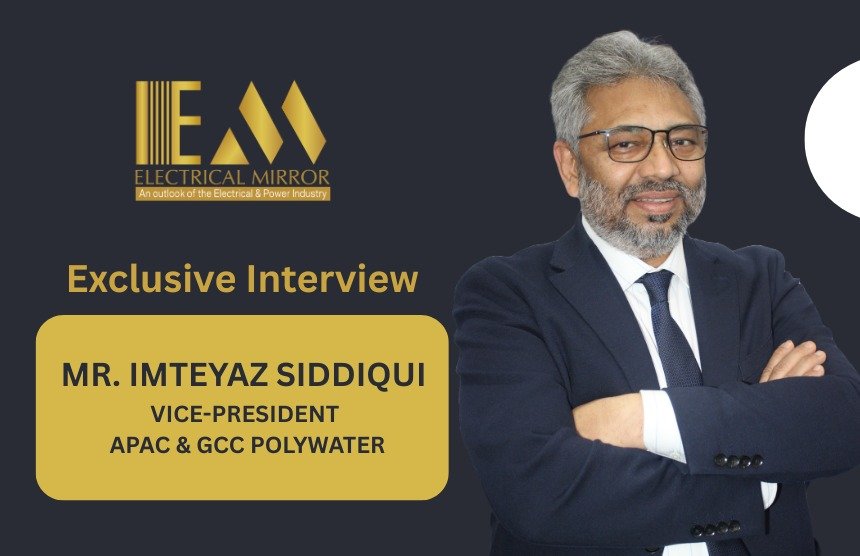
“Currently, market expansion and localisation are our top priorities. We’re enhancing regional presence through strategic distributor partnerships, local inventory placement, and dedicated technical support. The aim is to make Polywater products easily available when and where customers need them, avoiding project delays caused by lead times.”
What key industry trends and challenges are most influential in shaping the company’s strategic priorities today?
The power infrastructure landscape across India and APAC-GCC is undergoing a significant transformation, driven by several converging trends that are helping us in shaping Polywater’s strategic priorities.
The unprecedented pace of urbanisation, for example, India adds the equivalent of a new Surat to its urban population every year, is creating massive demand for residential, commercial, and institutional buildings that require extensive cable networks. Simultaneously, modern buildings are becoming cable-dense environments, with power cables, fibre-optics, EV charging infrastructure, and automation systems competing for conduit space, making installations increasingly complex.
Although a long way to go, we’re witnessing a welcome shift from lowest-cost procurement to total cost of ownership thinking. Developers and utilities now recognise that cable damage during installation leads to premature failures and safety hazards – creating opportunities for quality-focused solution providers.
Sustainability has moved from preference to imperative. Customers demand environmentally responsible products – biodegradable, nontoxic, and globally compliant. Polywater’s ecofriendly cable lubricants align perfectly with this expectation.
Finally, the skilled labour shortage across megaprojects demands installation solutions that are easier to apply and deliver consistent results regardless of operator experience.
These trends reinforce our strategic focus on knowledge sharing, application engineering support, and introducing world-class installation practices to the region.
From its inception with a single cable lubricant product, how has the company expanded its product portfolio over time?
Polywater’s journey is a remarkable story of innovation driven by customer needs. In 1973, our founder Nelson Jonnes developed a unique polymer-based lubricant (Polywater® A) that revolutionised cable installation. The industry then relied on mud, wax, and grease; our waterbased formulation represented a technological leap that forever changed cable pulling practices.
From that single product, we’ve evolved into a comprehensive solutions provider. Today, Polywater offers over 20 specialised cable lubricant formulations designed for specific applications – from standard power cables to LSZH/fire-retardant cables critical for high-occupancy buildings, fibre optics, and extreme temperature environments.
Our expansion followed the cable lifecycle philosophy. We developed an extensive range of cleaners that includes cable preparation cleaners for splicing and termination, electrical contact cleaners, hot-stick and rubber-goods cleaners for safety equipment maintenance, and our environmentally-friendly Solar Panel Wash (SPW™), which maximises PV generation efficiency without harming panels or aluminium mounting structures.
For asset protection, we introduced the PowerPatch® system for field repair of transformer oil and SF6 gas leaks – addressing critical environmental and operational challenges. Our duct sealing solutions, such as FST™ and ZipSeal™, protect infrastructure from water, gas, and pest intrusion.
We’ve also developed Pull-Planner® software, which we provide free of cost, to help engineers optimise cable system design, estimate tensions, and plan installations more effectively.
This evolution reflects our philosophy: we solve installation, maintenance, and asset-protection challenges throughout the entire infrastructure lifecycle.
.How do you ensure global consistency while remaining responsive to regional needs?
Global consistency is an integral part of Polywater’s operating philosophy and particularly relevant to my role leading the APAC & GCC markets.
This consistency begins with uncompromising product quality. Every Polywater product manufactured at our factory meets the highest specifications and performance standards. Our lubricants undergo rigorous testing validated against IEEE standards, and we maintain cable manufacturer approvals from leading global companies, which means a contractor in Mumbai receives the same proven performance as one in Minneapolis.
However, regional markets have distinct requirements. In India, for instance, the predominant practice has been direct burial of armoured cables in sand-bedded trenches – a method that’s cost-effective but limits future upgradeability and complicates fault repair. This practice differs significantly from markets where duct-based installations are standard practice.
We are seeing this transform quickly. India’s Smart Cities Mission, the Revamped Distribution Sector Scheme (RDSS), and urbanisation are driving a shift toward underground cabling using ducts. States like Maharashtra, Telangana, and Karnataka are leading large underground cabling projects where cables are pulled through HDPE or PVC conduits. This change offers a major opportunity for Polywater’s cable lubricants, which lower pulling tension, prevent jacket damage, and support longer installation lengths.
Our regional responsiveness means educating the market on best practices, providing application engineering support, and working with local distributors who understand ground realities. The key is listening to customers and adapting our support to their dynamic requirements.
What are the key supply chain challenges your company faces in the speciality chemicals sector, and what strategies are being implemented to address them?
The speciality chemicals sector faces unique supply chain complexities, and serving APAC & GCC markets from our US manufacturing base presents distinct challenges that require strategic solutions.
Currently Geopolitical and trade volatility is perhaps our most significant challenge. Recent disruptions – from shipping route diversions adding 8-12 days to Gulf-Asia voyages to evolving tariff structures that increase costs and unpredictable delays & lead times. For timesensitive infrastructure projects, delays can have cascading impacts on contractors and utilities.
Regulatory complexity across regions adds another layer. Chemical transportation regulations, hazardous material handling requirements, and import compliance vary significantly between India, GCC countries, and Southeast Asian markets. Navigating these while ensuring product integrity requires specialised expertise and robust documentation.
Rising logistics costs continue to pressure margins. Shipping rates, warehousing expenses, and last-mile delivery costs have increased substantially, making it harder to maintain competitive pricing.
Our strategies to address these challenges focus on building resilience to increase efficiency. In the future, we plan to establish regional inventory hubs to reduce reliance on long-distance shipments and ensure faster responses to customer needs. We’re strengthening strategic distributor partnerships with partners who maintain adequate stock levels and understand local market dynamics.
Demand forecasting and planning tools help us anticipate requirements and proactively position inventory. We’re also working on product registration and compliance across key markets to streamline regulatory clearances. The goal is to ensure that when a contractor in Mumbai or Riyadh needs Polywater products, they’re available without project-delaying lead times.
What emerging smart technologies and digital tools are being developed for utility companies, and how are they expected to transform the industry?
The utility sector is experiencing its most significant technological transformation in decades, and Polywater is evolving alongside these changes.
Artificial Intelligence and predictive analytics are enabling utilities to predict equipment failures before they occur, reducing unplanned outages by up to 40%. This shift to predictive maintenance places greater emphasis on installation quality – a cable damaged during installation becomes a latent defect that systems will eventually flag. Polywater’s cable lubricants ensure damage-free installations that deliver long-term reliability.
Digital twins – virtual replicas of physical infrastructure – are enabling utilities to simulate scenarios before execution. Polywater has been ahead of this curve with our Pull-Planner® software, which models cable routes to estimate pulling tensions and sidewall pressures before installation, essentially a planning-stage digital twin for cable systems.
IoT sensors and real-time monitoring in underground vaults track temperature, moisture, and equipment conditions. These sophisticated sensors require protected environments.
Polywater’s FST™ and ZipSeal™ duct sealing systems prevent water, gas, and pest intrusion, safeguarding both cables and monitoring equipment.
Asset life extension is crucial as utilities balance modernisation investments with the maintenance of existing infrastructure. Our PowerPatch® solution for transformer oil and SF6 leak repair extends asset life without costly replacements – aligning with the industry’s focus on maximising existing investments while funding smart grid upgrades.
Smart technologies deliver maximum value only when built on properly installed, well-protected infrastructure. Polywater’s solutions are essential enablers of this digital transformation.
Looking ahead, what strategic priorities does the company plan to focus on in the coming years?
Polywater’s strategic priorities are shaped by the transformative changes in global electrical infrastructure, with particular emphasis on highgrowth markets such as India and the broader APAC-GCC region.
Currently, market expansion and localisation are our top priorities. We’re enhancing regional presence through strategic distributor partnerships, local inventory placement, and dedicated technical support. The aim is to make Polywater products easily available when and where customers need them, avoiding project delays caused by lead times.
Product innovation aligned with market needs continues to drive our R&D focus. As India transitions from direct burial to duct-based cable installations, and as LSZH cables become standard in smart buildings and metro infrastructure, we’re ensuring our lubricant formulations meet these evolving requirements. Our expanding range of asset protection solutions – including leak repair systems and duct sealants – addresses the growing emphasis on infrastructure longevity.
Technical education and capability building are central to our approach. We’re investing in contractor training, application engineering support, and knowledge-sharing initiatives to help the industry adopt best practices, including the use of tools like Pull-Planner® software to help engineers optimise cable system designs.
Sustainability leadership remains non-negotiable. Our commitment to biodegradable, non-toxic formulations aligns with global environmental mandates and customer expectations for responsible products. Digital integration – enhancing our planning tools and customer support platforms – will ensure we remain relevant partners as utilities embrace smart grid technologies.
Ultimately, our priority is being recognised not just as a product supplier, but as a trusted solutions partner for infrastructure development across the region.
How does your company leverage industry platforms such as BuildELEC to foster innovation, develop strategic partnerships, and advance power distribution and smart electrical technologies?
Industry platforms like Buildelec are invaluable for Polywater’s engagement with the Indian market. They serve multiple strategic purposes that go far beyond product display.
Market intelligence and listening are perhaps the most important functions. Events like Buildelec bring together utilities, contractors, consultants, and technology providers under one roof. Understanding their challenges firsthand – whether it’s installation difficulties in congested urban conduits, fire safety compliance in highrise buildings, or asset maintenance concerns – directly informs our product development and application support priorities.
Partnership development is another critical outcome. Buildelec provides opportunities to connect with potential partners, contractors, consultants, system integrators, and industry associations. For Polywater, building a robust channel network across India requires identifying partners who share our commitment to quality and technical excellence.
Knowledge sharing and education align with our belief that industry advancement happens through the raising of collective capabilities. We use such platforms to conduct technical seminars, share global best practices in cable installation, and introduce tools like Pull-Planner® that help engineers design better cable systems.
Brand building and market positioning help establish Polywater as a serious, committed player in the Indian market – not a distant foreign supplier, but an engaged partner investing in the region’s infrastructure growth.
Buildelec’s focus on smart building technologies and energy efficiency resonates perfectly with Polywater’s solutions portfolio. We see participation in such IEEMA initiatives as essential to our long-term success in India.
