



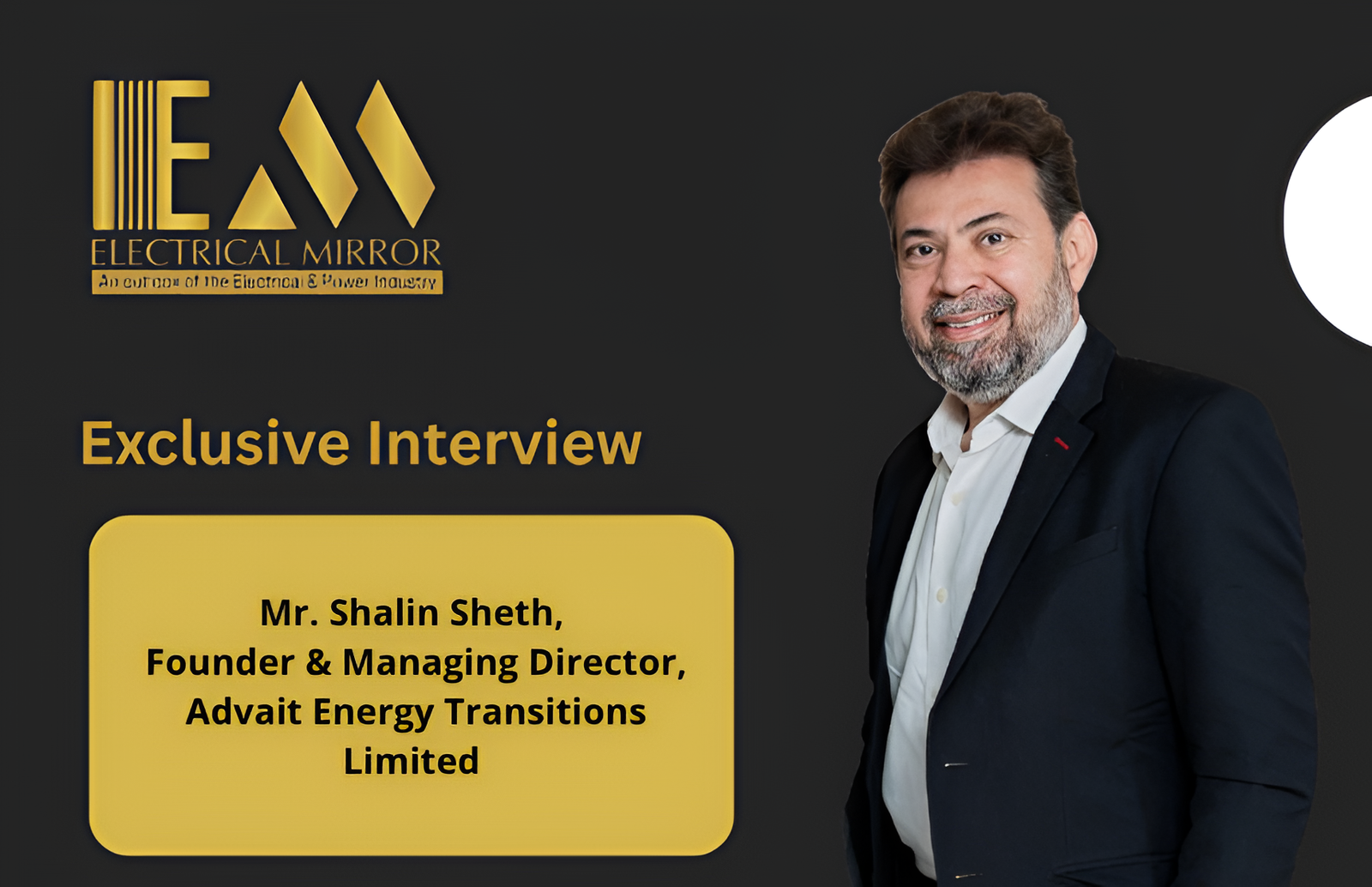
India’s energy transition requires a balanced approach that combines infrastructure development, clean-energy deployment, manufacturing capability, and technological innovation. Our roadmap reflects this reality. Alongside our transmission and infrastructure businesses, we are expanding our focus on renewable energy, energy storage, hydrogen technologies, and advanced manufacturing.
Q. Advait Energy Transitions has evolved from a power transmission company into an energy transition-focused organization. What has been the key driving force behind this transformation?
The transformation has been driven by a simple observation: India’s energy future requires both strong conventional infrastructure and new-age clean energy systems. Advait began by building capabilities in transmission infrastructure, where reliability, execution discipline, and engineering expertise are critical. Over time, we recognised that the same execution-first approach could be applied to emerging sectors such as renewable energy, energy storage, hydrogen, and advanced energy technologies. Rather than moving away from our roots, we have expanded upon them. The energy transition is not about replacing existing infrastructure overnight; it is about integrating new technologies into a reliable energy ecosystem. Our evolution reflects this broader industry shift, where infrastructure, manufacturing, and clean-energy technologies increasingly need to work together to support long-term growth and sustainability.
Q. The company has completed over 10,000 kilometers of live-line projects. How has this expertise helped Advait strengthen its position in India’s transmission infrastructure sector?
Live-line work requires a high level of technical precision, safety standards, and operational planning because maintenance and upgrades are carried out without interrupting power supply. Executing over 10,000 kilometres of live-line projects has allowed us to build deep expertise in maintaining grid reliability while supporting network expansion. This experience has strengthened our understanding of utility requirements, outage minimisation, and transmission asset management. It has also enabled us to develop specialised capabilities that become increasingly important as India modernises its transmission infrastructure. As power demand continues to rise and renewable energy integration expands, utilities are looking for solutions that improve reliability without compromising continuity of supply. Our live-line experience has positioned us well to contribute to these evolving infrastructure requirements.
Q. Advait is expanding into green hydrogen, electrolysers, and fuel cell technologies. How do you see these technologies contributing to India’s clean energy future?
Green hydrogen is expected to play an important role in sectors where direct electrification remains challenging, including certain industrial processes, mobility applications, and long-duration energy requirements. Electrolysers form the foundation of green hydrogen production, while fuel cells create opportunities for efficient utilisation across multiple applications. As renewable energy capacity grows, these technologies can help create additional pathways for decarbonisation and energy security. However, long-term success will depend on developing supporting infrastructure, manufacturing capability, and deployment ecosystems alongside technology adoption. We believe hydrogen will complement, rather than replace, other clean-energy solutions. Over time, a combination of renewable generation, storage, transmission infrastructure, and hydrogen technologies will contribute to a more diversified and resilient energy system.
Q.The company is developing Battery Energy Storage Systems (BESS) and solar integration projects. What opportunities do you see emerging in India’s energy storage market?
Energy storage is becoming increasingly important as renewable energy penetration rises. Solar and wind generation are variable by nature, making grid balancing and reliability key priorities. Battery Energy Storage Systems can help manage these challenges by improving flexibility, supporting peak demand management, and enhancing grid stability. Beyond utility-scale applications, storage is also creating opportunities in industrial energy management, commercial facilities, and distributed energy systems. As costs continue to evolve and deployment scales up, storage is expected to become an integral part of energy infrastructure rather than a supplementary component. We see significant opportunities in solutions that combine renewable generation, storage, and grid integration to support a more reliable and efficient power system.
Q. Advait has a presence in over 45 countries and has delivered 450+ projects globally. How important is international expansion for the company’s long-term growth strategy?
International exposure provides valuable opportunities to understand diverse infrastructure requirements, project environments, and operational challenges. Working across multiple geographies has helped us strengthen technical capabilities, quality standards, and project execution practices. At the same time, our primary focus remains on creating long-term value through engineering excellence and reliable delivery. International markets also offer opportunities for collaboration, technology partnerships, and knowledge exchange, particularly as energy transition technologies continue to evolve globally. We view international expansion as an extension of capability building rather than a standalone objective. The experience gained from global projects helps strengthen our overall platform and supports our ability to address increasingly complex infrastructure requirements.
Q. The company is focusing on advanced transmission solutions such as HTLS conductors, OPGW, and Emergency Restoration Systems (ERS). How are these technologies helping modernize India’s power infrastructure?
Modern transmission networks must support rising electricity demand, renewable energy integration, and greater reliability expectations. Technologies such as HTLS conductors help utilities increase transmission capacity without requiring entirely new corridors. OPGW enhances communication and grid monitoring capabilities, which are becoming increasingly important in modern power systems. Emergency Restoration Systems play a critical role in restoring damaged transmission infrastructure quickly following natural disasters or unforeseen events, helping reduce downtime and maintain continuity of supply. Together, these technologies support a more resilient, efficient, and responsive transmission network. As India’s grid continues to expand and modernise, advanced transmission solutions will play an increasingly important role in ensuring both reliability and scalability.
Q. Advait’s vision emphasizes sustainability, decarbonisation, and “Transforming Energy, Transforming Lives.” How is the company aligning its future roadmap with India’s net-zero and renewable energy ambitions?
India’s energy transition requires a balanced approach that combines infrastructure development, clean-energy deployment, manufacturing capability, and technological innovation. Our roadmap reflects this reality. Alongside our transmission and infrastructure businesses, we are expanding our focus on renewable energy, energy storage, hydrogen technologies, and advanced manufacturing. We are also investing in capabilities that support localisation, technology adoption, and long-term industrial development. Sustainability for us is not limited to a single technology or project category; it involves building systems that improve reliability, support decarbonisation, and create long-term value for stakeholders. As India progresses toward its renewable energy and net-zero ambitions, we aim to contribute through practical execution, engineering expertise, and infrastructure solutions that support the broader energy ecosystem.
