



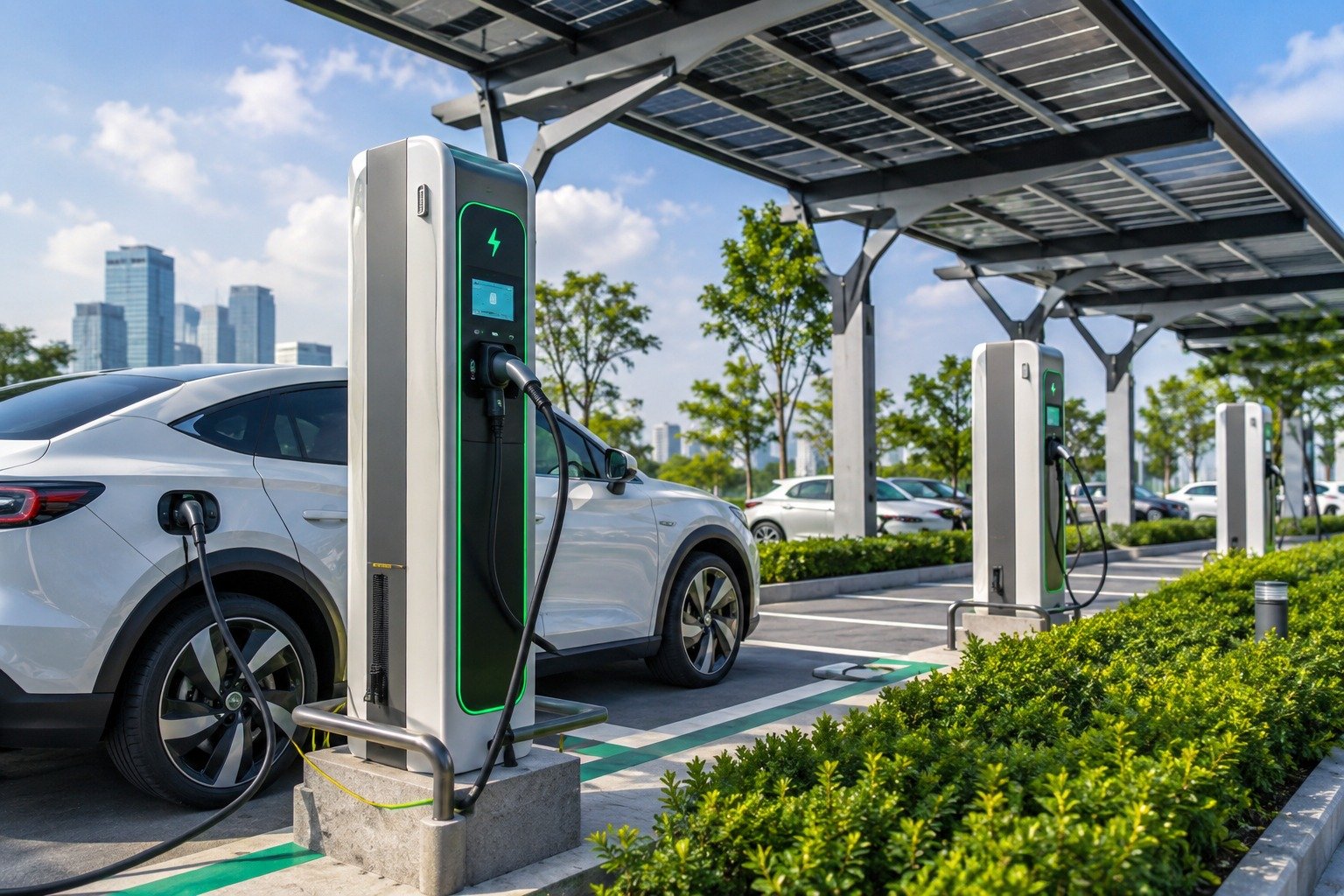
India’s EV charging network under the FAME-II ecosystem continues to expand rapidly, with the country’s electric vehicle charging infrastructure reaching 67,657 chargers as of August 7, 2026, including 1,139 chargers at battery-swapping stations across States and Union Territories. This growth in India’s EV charging network is taking place alongside sustained government support for electric vehicle adoption and charging infrastructure development.
According to data released by the Ministry of Heavy Industries, the FAME India Phase-II scheme had supported the sale of 16.72 lakh electric vehicles as of June 30, 2026. The supported vehicles include electric two-wheelers, three-wheelers and four-wheelers. The scheme has also supported the deployment of 5,299 electric buses as of July 31, 2026.
FAME-II was implemented for five years from April 1, 2019, to March 31, 2024, with a total budgetary outlay of ₹11,500 crore. The programme combined demand incentives for electric vehicles with financial support for electric buses and the development of public charging infrastructure.
The latest charging infrastructure numbers underline the transition from an early-stage EV market towards a more established mobility ecosystem. The availability of charging points is particularly important for addressing range concerns and enabling wider adoption of electric vehicles beyond controlled urban routes.
Government support is also extending beyond FAME-II. The PM E-DRIVE scheme has supported the sale of 26.59 lakh EVs, according to the latest data, while the Production Linked Incentive scheme for automobiles and auto components had supported around 21.30 lakh EVs as of March 31, 2026.
The PM-eBus Sewa-Payment Security Mechanism scheme had covered 27,555 electric buses as of July 10, 2026, indicating that electrification is increasingly moving into public transport as well as private and commercial mobility. Large-scale deployment of electric buses is expected to create additional demand for depot charging systems, high-capacity electrical infrastructure and grid connections. Alongside direct incentives, the government has also highlighted measures intended to make EV ownership more attractive. GST on electric vehicles and their chargers or charging stations has been reduced to 5%, while battery-operated vehicles have been provided with green licence plates and exemption from permit requirements.
The growth of charging infrastructure is also changing the requirements of India’s urban power and transportation systems. As EV penetration rises, charging demand will increasingly need to be integrated with local distribution networks, particularly in areas with high concentrations of private vehicles, commercial fleets and electric buses.
Battery swapping is emerging as another component of this infrastructure landscape. The inclusion of 1,139 battery-swapping station chargers in the latest national count points towards a more diversified approach to energy replenishment, particularly for vehicle segments where minimising downtime is important.
The next phase of India’s EV transition will therefore depend not only on increasing vehicle sales but also on building a charging network that is accessible, reliable, interoperable and adequately connected to the power grid. The expansion from vehicle incentives towards broader charging and public-transport infrastructure suggests that EV adoption is increasingly being treated as an integrated mobility and infrastructure challenge.
With more than 67,600 chargers already installed and millions of vehicles supported through successive government programmes, India’s EV ecosystem is moving towards a scale where infrastructure availability, grid readiness and utilisation efficiency will become as important as vehicle affordability in determining the pace of future electrification.
