


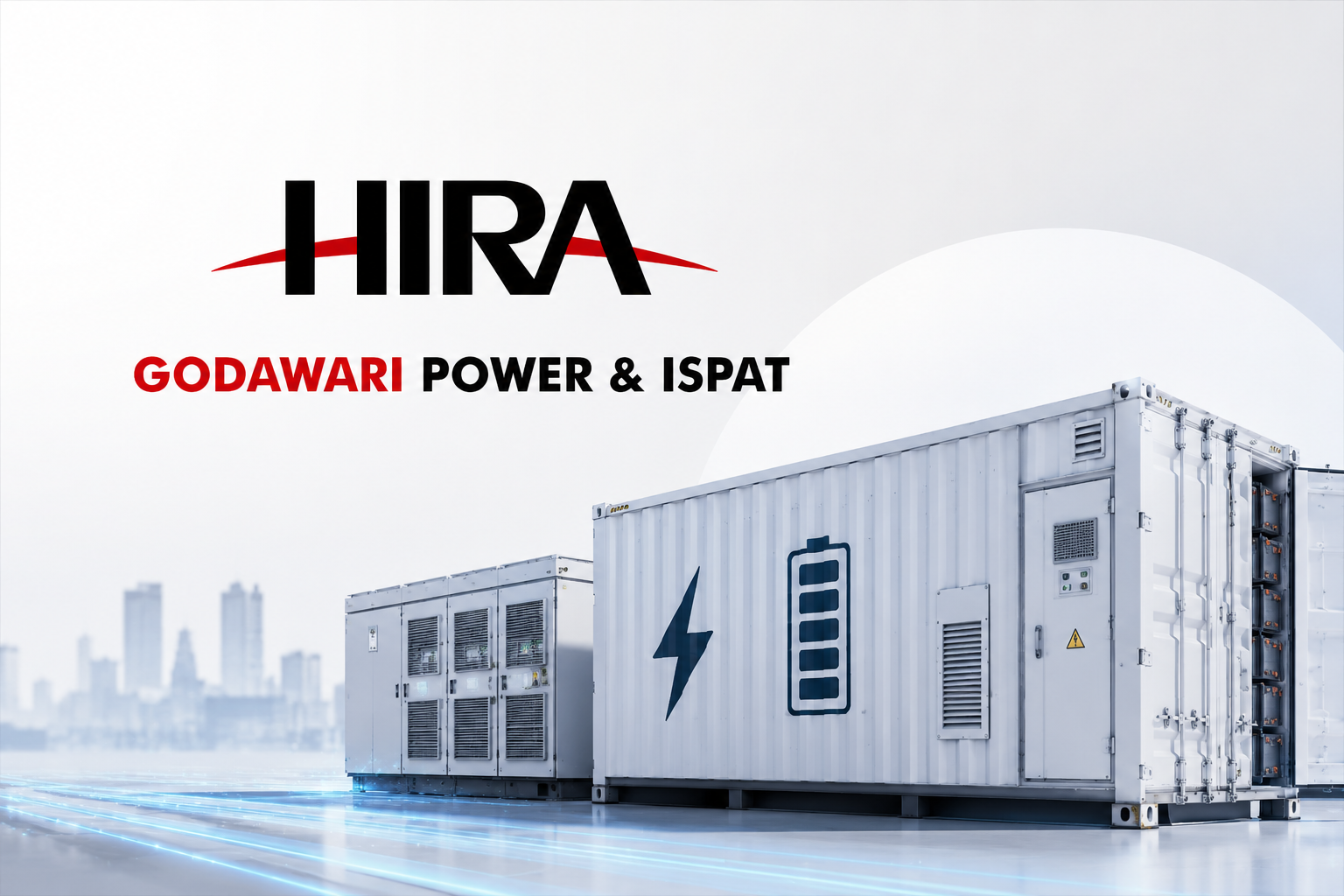
Godawari Power & Ispat Limited (GPIL) has increased its investment in its wholly owned subsidiary, Godawari New Energy Private Limited (GNEPL), by ₹100 crore through a rights issue, strengthening the subsidiary’s financial position for the development of a Battery Energy Storage System (BESS) manufacturing facility.
The company informed the stock exchanges that GNEPL allotted 10 crore equity shares of ₹10 each at par value on June 4, 2026, aggregating to ₹100 crore. GPIL received the intimation regarding the allotment on June 5, 2026.
Following the allotment, GPIL’s total investment in GNEPL has increased from 35 crore equity shares to 45 crore equity shares of ₹10 each, taking its aggregate investment in the subsidiary to ₹450 crore. GPIL continues to hold 100 percent of the paid-up share capital of GNEPL.
The investment forms part of GPIL’s previously announced plan to provide funding support for capital expenditure and working capital requirements associated with the establishment of a 20 GWh Battery Energy Storage System plant in the first phase of the project.
According to the company, the funds infused into GNEPL will be utilized to meet the proposed capital expenditure and operational funding needs for setting up the Battery Energy Storage System manufacturing facility.
GNEPL, incorporated on June 25, 2025, operates in the energy sector with a focus on Battery Energy Storage Systems. The company is currently in the process of developing the BESS project and has not yet commenced commercial operations.
The subsidiary has its registered office in Raipur, Chhattisgarh, while its operational facility is planned to be established in Maharashtra. As of March 31, 2026, GNEPL reported a net worth of ₹298.01 crore and recorded no turnover, as commercial activities are yet to begin.
GPIL stated that the transaction qualifies as a related-party transaction because GNEPL is its wholly owned subsidiary. However, apart from this relationship, the promoter, promoter group, and group companies have no additional interest in the entity. The company also clarified that no governmental or regulatory approvals are required for the investment.
