


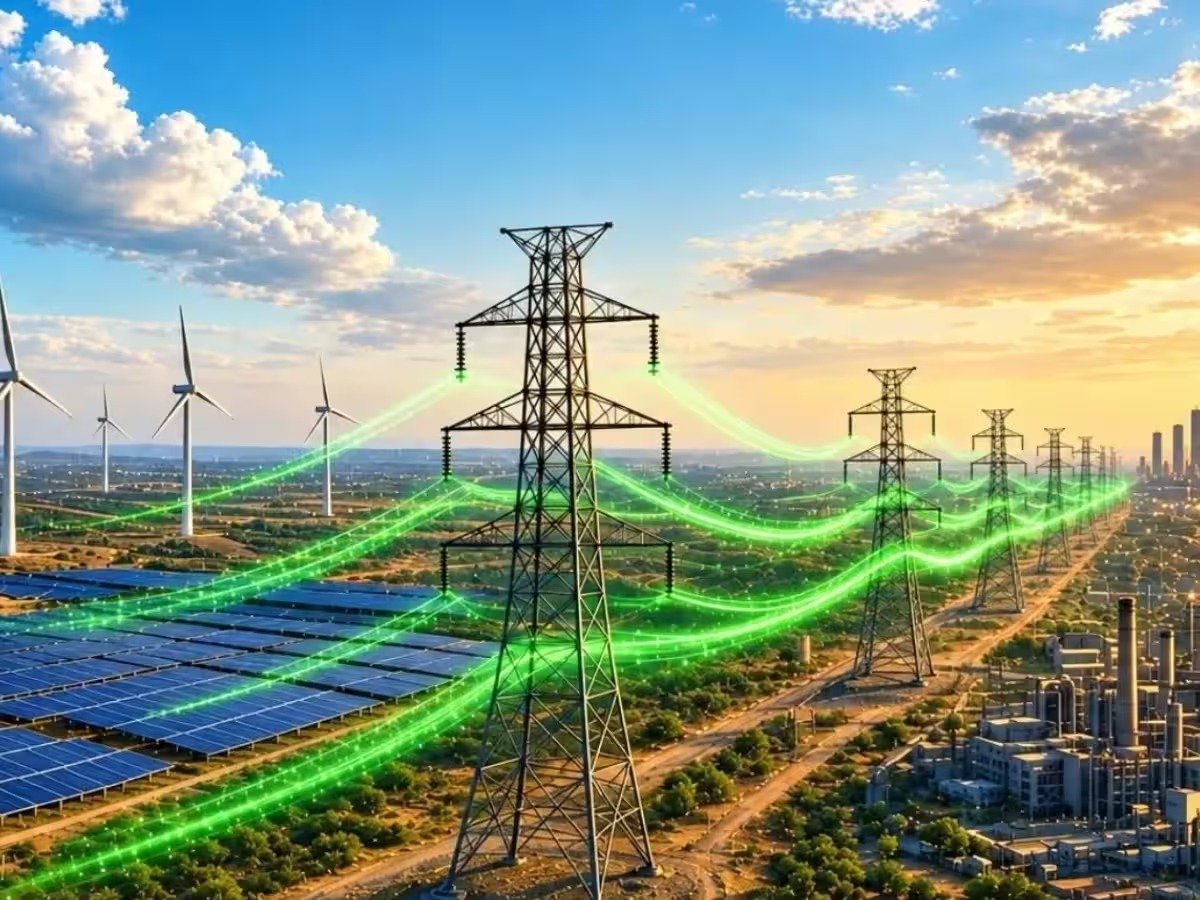
India has approved a major power transmission corridor, estimated to cost around ₹68,800 crore, to move electricity from renewable energy generation centres in western India to industrial and urban consumption centres in the east.
The project is expected to be completed over a period of approximately six years and is aimed at strengthening the country’s long-distance power transmission infrastructure to support rising electricity demand and renewable energy integration.
The proposed transmission system will operate at 1,150 kV, making it India’s highest-voltage power transmission network.
It will surpass the existing 765-kV transmission infrastructure and is expected to significantly increase the volume of electricity that can be transported across regions.
Higher-voltage transmission systems can carry larger quantities of power with improved efficiency, potentially reducing transmission losses and the requirement for multiple transmission lines and associated land.
The first phase of the project will connect Chhattisgarh, Odisha and West Bengal, creating an important transmission link between power generation regions and major electricity-consuming centres.
It will also be integrated with a 6,000-MW transmission system designed to carry renewable electricity from Rajasthan’s Bhadla solar region.
This connectivity is expected to improve the evacuation of solar power and enable a greater share of renewable electricity to reach industrial and commercial consumers in eastern India.
The project assumes importance as India continues to expand its renewable energy capacity and strengthen the national electricity grid.
The growing concentration of solar and wind generation in resource-rich states has increased the need for an efficient inter-regional transmission network capable of transporting electricity over long distances.
The proposed corridor is expected to address some of these requirements while supporting the country’s clean energy transition.
