


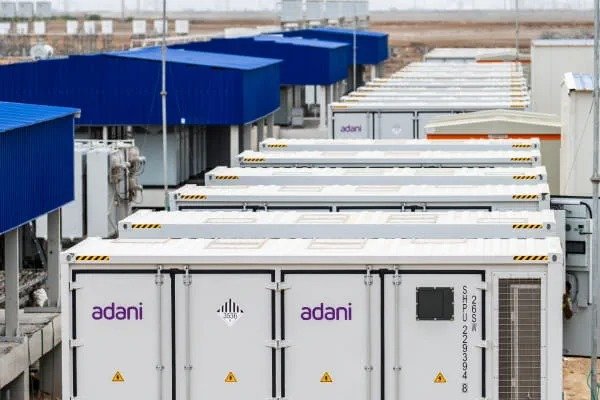
Adani Green Energy is increasing its focus on battery energy storage systems as it seeks to address challenges associated with electricity evacuation and transmission network availability.
The issue has become increasingly important for renewable energy developers as new generation capacity is being added across locations where transmission infrastructure may not always be available to accommodate the entire volume of electricity produced.
Primarily, the company faced an estimated EBITDA impact of around Rs 700 crore during the six months ended September due to grid-related constraints.
The development highlights the financial implications of delays or limitations in power evacuation infrastructure for electricity producers.
Renewable energy projects, particularly solar and wind installations, are often located in areas with strong natural generation potential but may be situated far from major electricity consumption centres.
The electricity generated at these locations needs to be transmitted through high-capacity transmission lines and substations before reaching distribution utilities and consumers.
When the available transmission capacity is insufficient, power producers may face restrictions on the amount of electricity they can supply to the grid.
Such limitations can affect plant utilisation and reduce the revenue that developers could otherwise generate from their installed capacity.
Battery energy storage systems offer one possible solution by allowing surplus electricity to be stored and supplied at a later time, depending on grid availability and market requirements.
These systems can also help manage variations in renewable power generation and improve the flexibility of electricity supply.
The development is significant for India’s wider electricity infrastructure industry because it highlights the need to expand transmission capacity alongside renewable generation.
