


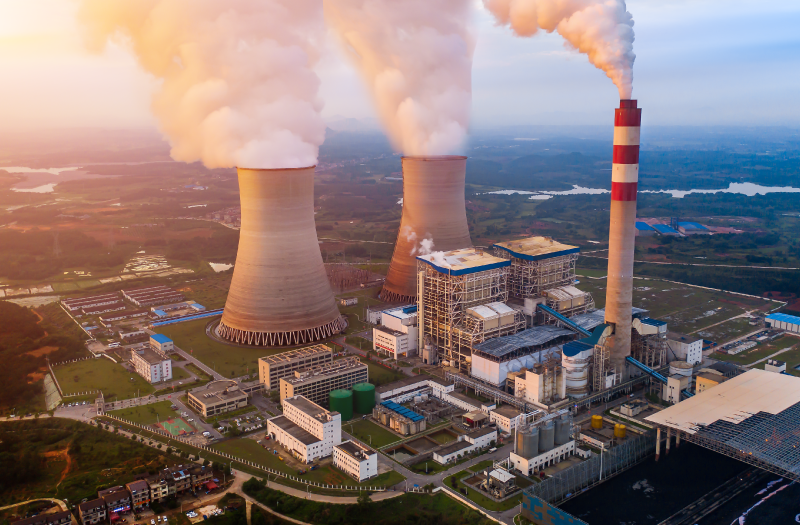
India’s power generation mix is expected to witness a structural shift, with the share of thermal power projected to fall below 70 percent for the first time in the next financial year, according to an assessment by CRISIL. The decline is being driven by slower growth in electricity demand and a sharp rise in renewable energy generation.
In the current fiscal year, thermal power’s contribution to total generation is estimated to ease to around 72 percent, down from approximately 75 percent in the previous year. As a result, plant load factors of thermal power plants are expected to moderate to about 64–66 percent in the current and next fiscal years, compared with nearly 69 percent last year.
Despite the declining share, thermal power continues to play a critical role in meeting India’s base load requirements. A rise in long-term power purchase agreements has improved revenue visibility for thermal generators, encouraging a revival in capital expenditure across the sector. This renewed investment activity is expected to increase leverage for thermal power producers over the next three to four years. However, CRISIL notes that steady cash flows and prudent debt management should help maintain stable credit profiles even as borrowings rise to fund new projects.
Power demand growth is expected to slow sharply to around 1–2 percent in the current fiscal year, largely due to favourable weather conditions such as an early monsoon and a milder summer. Demand growth is projected to recover to about 4–6 percent next fiscal year, supported by a low base. Even so, the average growth rate across the two years is expected to remain below 4 percent, weaker than the 5.6 percent average recorded over the previous five years.
In contrast, renewable energy generation is set to grow at a much faster pace, with a projected compound annual growth rate of 18–20 percent over the current and next fiscal years. This growth will be supported by the addition of around 75–85 GW of renewable capacity, backed by a strong pipeline of utility-scale projects and increasing installations in the commercial, industrial, and rooftop segments. As a result, renewables are expected to meet most of the incremental power demand in the country.
According to CRISIL, the intermittent nature of renewable energy and the still-limited deployment of energy storage systems mean that thermal power will remain essential for grid stability. This has prompted distribution companies to sign more long-term thermal PPAs to ensure round-the-clock power availability. As a result, nearly 85 percent of the roughly 60 GW operational capacity held by independent power producers is now tied up under PPAs, compared with about 79 percent at the end of the previous fiscal year.
These PPAs typically follow a two-part tariff mechanism, comprising fixed capacity charges and variable energy charges. Capacity charges are fully recoverable if the plant meets the prescribed availability norms, shielding a portion of revenues from fluctuations in plant utilisation. Around 40 percent of the contracted capacity operates under cost-plus bidding, allowing full pass-through of coal costs. For the remaining capacity awarded through competitive bidding, any moderation in plant load factors is expected to have only a limited impact on cash flows, as variable charges form a smaller share of overall earnings.
An analysis of 26 independent power producers, representing more than three-fourths of India’s private thermal power capacity, shows that leverage levels have improved significantly in recent years. Debt-to-Ebitda ratios declined from around seven times in fiscal 2020 to about 2.2 times in fiscal 2025. With fresh investments in thermal capacity, leverage is expected to rise modestly and peak at around three times by fiscal 2029, before easing as new plants begin operations and generate cash flows.
Most of the planned capacity expansions are being undertaken by established players as extensions of existing projects and are supported by secured offtake arrangements, reducing execution and market risks. CRISIL adds that strong and stable cash flows should ensure that debt servicing capacity remains comfortable.
The outlook, however, remains sensitive to weather-related variations in power demand and the actual pace of renewable energy capacity additions.
