


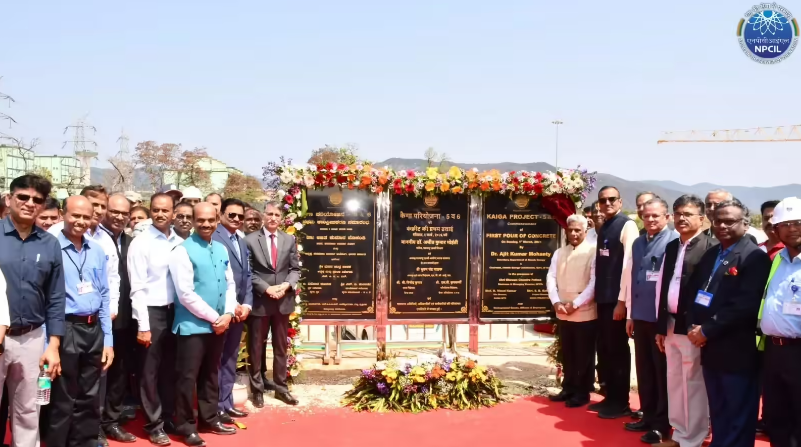
Nuclear Power Corporation of India Ltd (NPCIL) has commenced construction of Kaiga Nuclear Power Plant Units 5 and 6 with the first concrete pour at the site in Karnataka, marking a key milestone in the expansion of India’s nuclear energy capacity.
The first concrete pour, a critical step in the construction of a nuclear reactor building was carried out at the Units 5 & 6 project, signalling the start of major civil works. This development comes as part of NPCIL’s broader plan to add new generation capacity through indigenous pressurised heavy water reactors (PHWRs) designed to enhance energy security and provide continuous, low-carbon power.
Kaiga Units 5 and 6 are planned to be 700 MW class reactors and form an integral part of India’s strategy to diversify its energy mix, reduce dependence on fossil fuels and strengthen baseload electricity supply. Upon completion, the new units are expected to contribute significantly to the state grid as well as to meeting national energy demand.
The project’s commencement follows detailed preparatory work including site development, regulatory clearances and procurement of long-lead equipment. The first concrete pour is typically followed by structural construction of the containment and auxiliary buildings, paving the way for subsequent installation of reactor systems and associated infrastructure.
NPCIL’s expansion at the Kaiga site reflects continued emphasis on nuclear power as a reliable, emission-free source of electricity. The new units are expected to utilise advanced Indian nuclear technology and adhere to stringent safety and quality norms.
Officials involved in the project said that the commencement of construction for Units 5 and 6 underscores the government’s commitment to scaling up nuclear capacity and supporting India’s long-term energy transition goals.
Once operational, the additional capacity from Kaiga will help meet growing electricity needs while contributing to national targets for clean energy generation and carbon reduction.
