


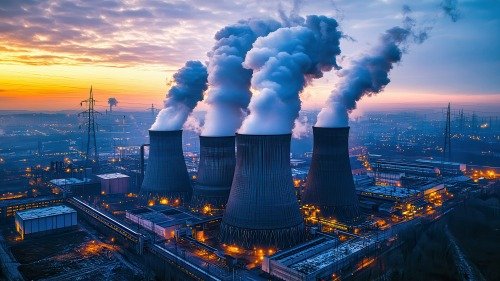
JSW Energy’s subsidiary, JSW Thermal Energy Two Limited, has signed a Power Purchase Agreement (PPA) with West Bengal State Electricity Distribution Company Limited (WBSEDCL) for a 1,600 MW greenfield thermal power project in West Bengal. The project, to be developed at Salboni, will be commissioned within six years and was awarded through a competitive bidding process using domestic linkage coal.
The PPA covers a 1,600 MW (2 x 800 MW) supercritical or ultra-supercritical thermal power plant. The project will utilise domestic coal allocated to West Bengal, supporting reliable baseload power supply for the state.
With this agreement, JSW Energy’s total planned capacity at the Salboni site will rise to 3,200 MW, making it the company’s largest single-location asset. An existing 1,600 MW unit is already under construction at the same location.
Commenting on the development, Sharad Mahendra, Joint Managing Director and CEO of JSW Energy, said the project reinforces the company’s commitment to India’s energy security. He highlighted the strategic advantages of the Salboni site, including proximity to coal blocks and operational synergies with the ongoing project.
JSW Energy currently owns and operates 5,658 MW of thermal generation capacity. With 3,200 MW under construction at Salboni and an option to add 1,800 MW at KSK Mahanadi, the company’s total thermal capacity is expected to increase to 10,658 MW.
Overall, JSW Energy has a locked-in generation capacity of 32.1 GW, comprising 13.3 GW operational, 14 GW under construction across thermal and renewable segments, 150 MW under acquisition in hydro, and a development pipeline of 4.6 GW. The company also has 29.4 GWh of locked-in energy storage capacity.
JSW Energy has set a target of achieving 30 GW of generation capacity and 40 GWh of energy storage capacity by 2030, in line with its long-term goal of attaining carbon neutrality by 2050.
