


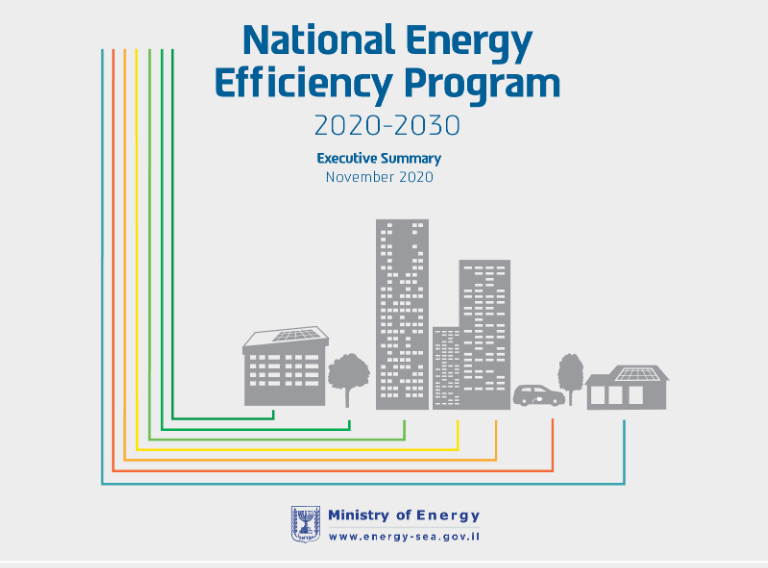
Israel has unveiled an ambitious 10-year National Energy Efficiency Plan designed to curb energy demand, reduce emissions, and accelerate the country’s transition toward a cleaner power system by 2030. The programme sets clear national goals: improving overall energy intensity by 11% by 2025 and 18% by 2030, using 2015 as the baseline. Government assessments indicate that meeting these targets could lower Israel’s final energy consumption by nearly 16.5 terawatt-hours over the decade and cut greenhouse gas emissions by up to 6 million tonnes of CO₂-equivalent, representing about 7.5% of the country’s total emissions.
The roadmap introduces a series of structural reforms aimed at reshaping the nation’s energy landscape. These include new minimum energy-performance standards for appliances, enhanced labelling for residential and commercial buildings, and financial incentives to help industries adopt high-efficiency technologies. A major reform area is transport, with Israel planning to end the sale of new heavily polluting vehicles by 2030, supported by a rapid rollout of electric-vehicle charging infrastructure and dedicated innovation funding.
The plan also emphasizes improving energy performance across public-sector buildings and expanding the use of renewable energy systems. Policymakers say the initiative will play a central role in helping Israel reach its target of sourcing 30% of electricity from renewable energy by 2030, while simultaneously stimulating economic growth, supporting clean-tech development, and creating new green jobs.
