


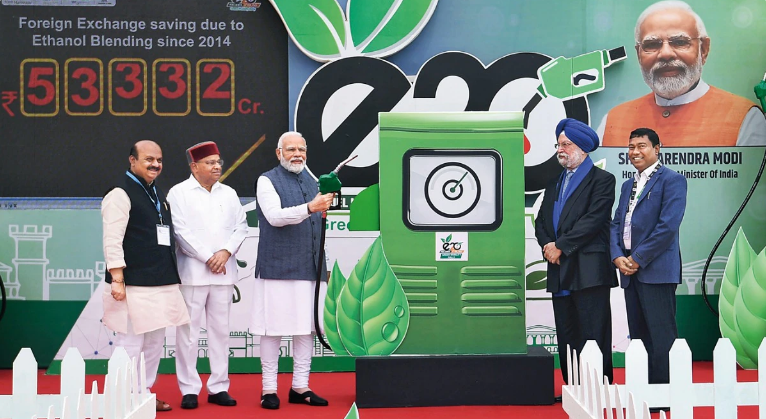
India’s accelerating ethanol blending programme is emerging as a key pillar of the country’s energy and rural development strategy, with potential foreign exchange savings and broad economic benefits estimated at around ₹2 lakh crore as the nation pushes beyond its current blending targets. 
The ethanol blending initiative, officially known as the Ethanol Blended Petrol (EBP) Programme, has been instrumental in reducing crude oil imports by substituting a portion of conventional petrol with domestically produced biofuel. This not only strengthens India’s energy security but also channels significant funds back into the domestic economy. 
Under current policy, petrol dispensed at retail outlets across India now contains up to 20 per cent ethanol (E20), a milestone achieved ahead of earlier timelines and supported by rapidly expanding production capacity. This blending level has already delivered tangible benefits, including annual foreign exchange savings of approximately ₹40,000 crore and a boost to rural incomes, with ethanol procurement injecting substantial revenue into farming communities and distilleries. 
Industry experts believe that if higher blending levels and broader adoption of ethanol-compatible fuels are realised along with supportive infrastructure and vehicle readiness, the country could scale annual foreign exchange savings to as much as ₹2 lakh crore. This figure reflects the larger macroeconomic impact of reducing dependence on imported crude oil, given India’s status as one of the world’s largest energy importers. 
The shift toward ethanol not only benefits the energy sector but also provides a significant rural economic stimulus. Farmers receive assured demand for feedstocks like sugarcane, maize and surplus grains, while distilleries and related agro-processing units contribute to job creation and value addition in rural regions. Observers note that this expanding biofuel value chain is helping diversify income for agricultural communities and strengthen local economies. 
Government support through pricing incentives, tax reductions and long-term procurement policies has underpinned industry confidence and investment in ethanol infrastructure. Meanwhile, discussions around extending blending mandates beyond 20 per cent and facilitating wider availability of ethanol-compatible vehicles continue, aiming to amplify both economic and environmental returns. 
As the programme evolves, proponents argue that a comprehensive approach to feedstock diversification, fuel distribution and consumer adoption will be key to unlocking the full ₹2 lakh crore savings potential while reinforcing India’s transition toward cleaner and more self-reliant energy systems. 
