


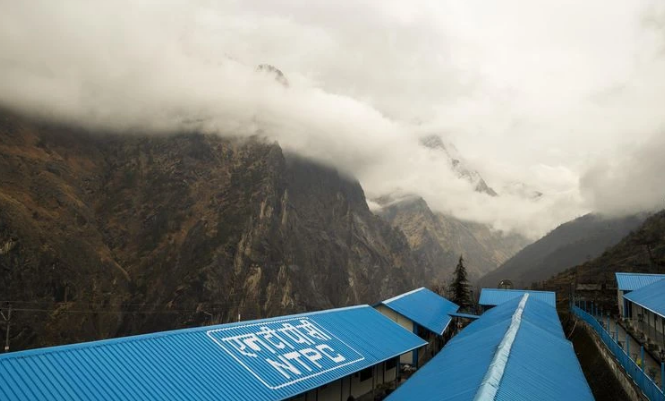
India-US cooperation in the nuclear energy sector is set to deepen, with state-owned NTPC Ltd planning to partner with Chicago-based Clean Core Thorium Energy (CCTE) for the development of thorium-based nuclear fuel. CCTE has become only the second US company in nearly two decades to receive an export licence from the US Department of Energy permitting nuclear technology transfers to India.
According to reports, NTPC’s board has approved a proposal to acquire a minority equity stake in Clean Core as a strategic early-stage investment in advanced nuclear fuel technology. The move is viewed as a significant step in strengthening bilateral atomic energy ties between India and the United States, even as broader trade relations between the two countries remain uncertain. The proposed investment will require approval from India’s Ministry of Power.
Sources indicate that the investment aligns with NTPC’s long-term objective of developing 30 gigawatts of nuclear power capacity by 2047. It also supports the company’s ambition to explore participation in the nuclear fuel cycle, in line with India’s strategic energy priorities.
The development comes amid the government’s broader plan to evaluate the use of thorium-based fuel in India’s existing fleet of Pressurised Heavy Water Reactors (PHWRs). Such a move could significantly enhance India’s long-term energy security and reduce dependence on imported nuclear fuel.
A major policy shift supporting this initiative occurred in December, when Parliament passed the Sustainable Harnessing and Advancement of Nuclear Energy for Transforming India (SHANTI) Act, 2025. The legislation marks a significant change in the governance of India’s tightly regulated nuclear power sector. For the first time, it allows private companies to participate in nuclear operations and opens the door to potential foreign involvement in the future. The Act also permits private participation in nuclear fuel management, a domain previously reserved exclusively for the public sector.
Clean Core’s thorium-based fuel offers a practical advantage, as it can be shipped to India and directly loaded into existing PHWRs. Thorium, a naturally occurring radioactive metal, has long been central to India’s nuclear strategy. Since the 1950s, policymakers have promoted thorium as an alternative to uranium due to its relative abundance in India, lower production of long-lived radioactive waste, and reduced risk of nuclear proliferation.
India has limited domestic uranium reserves but possesses some of the world’s largest thorium deposits, making thorium a cornerstone of its long-term plan to reduce reliance on imported nuclear fuel.
CCTE founder and CEO Mehul Shah, an Indian-origin nuclear entrepreneur, has adopted a different approach to thorium deployment. Rather than waiting for new reactors planned under the final stage of India’s three-stage nuclear programme, his company has developed an advanced fuel that blends thorium with high-assay low-enriched uranium (HALEU). This blended fuel is designed for use in existing PHWRs, which currently form the backbone of India’s nuclear power capacity.
The fuel, branded as ANEEL (Advanced Nuclear Energy for Enriched Life), is intended for large-scale deployment in India’s PHWR fleet. By combining thorium with a limited quantity of enriched uranium, the fuel aims to improve energy security using domestic resources, enhance safety and proliferation resistance, reduce nuclear waste, lower operating costs, and deliver higher energy output while remaining within established safety parameters.
Reports indicate that Clean Core featured in assurances provided by India’s Department of Atomic Energy and the Atomic Energy Regulatory Board to US authorities between March and May 2025. Following these assurances, the US Department of Energy granted Clean Core an export licence in August. Earlier, in March, the US Department of Energy had approved a similar authorisation for New Jersey-based Holtec International under the stringent “10CFR810” regulations governing nuclear technology transfers.
Nuclear scientist Anil Kakodkar has noted that India could leverage its large PHWR capacity, currently fuelled by imported uranium, to irradiate thorium alongside HALEU fuel. This process would allow thorium to be converted into fissile uranium-233 at scale, enabling India to enter the thorium phase of its three-stage nuclear programme earlier than originally planned, without waiting for large-scale deployment of fast breeder reactors under the second stage.
PHWRs constitute the first stage of India’s three-stage nuclear programme. According to Kakodkar, spent fuel from PHWRs can also be recycled to generate additional power, including through technologies such as molten salt reactors, helping India move more rapidly towards independence from imported nuclear fuel.
Thorium itself is not fissile, as it does not readily split when struck by a neutron. However, it is considered fertile, as it can absorb neutrons and transform into uranium-233, a fissile material capable of sustaining nuclear reactions.
India’s Department of Atomic Energy has long envisaged harnessing thorium reserves found in coastal and inland sands across multiple states. Progress under the programme’s second stage, which relies on fast breeder reactors, has been slower than anticipated. Highlighting the challenges associated with deploying fast breeder reactors at scale, Kakodkar has argued that India should prioritise fuel cycle development over reactor design. He has emphasised the need to establish a self-sustaining thorium-based nuclear ecosystem as early as possible, supported by adequate reactor capacity to convert thorium into fissile material in a timely manner.
