

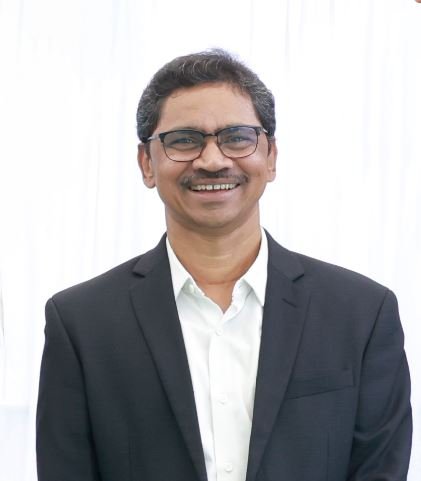
By Raj Kumar Medimi — Executive Director, Trinity Cleantech
Beyond the Panels: The Reality of Grid Integration
India is witnessing a solar explosion. From massive utility-scale parks in the Thar Desert to the PM-KUSUM scheme’s decentralized agricultural arrays, the country is on a relentless march toward 500 GW of non-fossil fuel capacity by 2030. While the world stares at the vast fields of blue panels, the electrical industry is focused on a more complex challenge: how do we get that power into the grid efficiently and safely?
For decades, the Indian power sector operated on a simple, linear premise: generate power in coal plants, step it up for transmission, and step it down for the consumer. The humble transformer was a static, heavy-duty “muscle” for this one-way flow. But today, the script has flipped. As the grid moves from a linear model to a bi-directional web, the demand for specialized transformers has skyrocketed. Standard distribution transformers are no longer sufficient to handle the unique electrical stresses of solar energy.
The “Inverter Duty” Revolution
The most significant technical shift is the rise of Inverter Duty Transformers (IDTs). Unlike a coal plant that produces a smooth, natural sine wave, solar panels generate DC power that must be converted to AC by inverters. This conversion process is inherently “noisy,” creating high-frequency harmonics and pulsed voltage waveforms that can destroy a standard transformer’s insulation.
At Trinity CleanTech, we have redefined the internal architecture of these units. Our IDTs are engineering marvels designed to withstand these high-frequency vibrations and the thermal stress of constant load fluctuations. We utilize specialized multi-winding designs,often 3, 4, or even 5 windings in a single tank,that allow a single transformer to connect multiple inverter strings to the grid simultaneously.
This multi-winding approach is critical for utility-scale solar parks. It reduces the number of units needed on-site, lowering the overall Balance of System (BoS) costs while simplifying the electrical layout. However, it requires extreme precision in winding to ensure that the impedance between each winding is perfectly balanced to prevent circulating currents and overheating.
PM-KUSUM: Decentralizing the Grid and the “Prosumer” Farmer
The PM-KUSUM scheme is perhaps the most ambitious decentralization of power in India’s history. By enabling farmers to set up small-scale solar plants on their land (Component A) or solarize existing agricultural pumps (Component C), the government is turning farmers from energy consumers into “prosumers.”
However, this creates a massive challenge for DISCOMs. Traditional rural feeders were designed to push power to the farm. Now, those same feeders must absorb power from thousands of distributed solar arrays and push it back up the grid. This reversal of power flow creates voltage “swells” and instability at the grid edge.
This requires “Smart” Distribution Transformers. At our Jadcherla plant, we are manufacturing transformers equipped with On-Load Tap Changers (OLTC) and digital monitoring. These units can automatically adjust voltage levels in real-time to stabilize the local grid when solar generation peaks at noon. Without this specialization, the influx of solar power would cause voltage surges that could damage household appliances across rural villages, leading to grid rejection and wasted energy.
The Efficiency Imperative: Saving Every Watt
In the solar industry, efficiency is the currency of success. If a solar farm is 1% more efficient, it translates to millions of rupees in additional revenue over its 25-year lifespan. As transformer manufacturers, we are the gatekeepers of this efficiency. We operate on the principle that “every watt saved is a watt generated.”
A transformer never generates power; it only converts it. But if we can reduce the core losses of a transformer, we effectively “generate” that much more power for the grid without any additional solar panels. In the past, rural agricultural feeders were notorious for high technical losses. Today, aligned with Bureau of Indian Standards (BIS) IS 1180 norms, we are producing high-efficiency transformers using amorphous core technology and high-grade Cold Rolled Grain Oriented (CRGO) steel.
In a grid the size of India’s, even a 0.5% efficiency gain across the transformer fleet translates to megawatts of power saved. For a solar plant that doesn’t generate power at night, reducing the “No-Load” losses (the power consumed by the transformer just to stay energized) is critical for the project’s bottom line.
Environmental Resilience: Designing for Harsh Climates
Solar plants are rarely located in temperate zones; they are built in some of the harshest environments on earth,the scorching heat of the desert or the salt-laden humidity of coastal regions. These environments accelerate the aging of electrical equipment.
Standard mineral oil used in transformers is a fire risk and a potential environmental pollutant if it leaks. To meet the sustainability goals of our clients, Trinity CleanTech is leading the shift toward Natural Ester fluids. These vegetable-based oils have a fire point significantly higher than mineral oil (above 300°C vs 170°C), making them safer for solar parks where a fire could wipe out acres of panels. Furthermore, they are 100% biodegradable. This ensures that the “Green” revolution remains green, even down to the cooling fluids in our equipment.
Our designs also incorporate enhanced cooling fins and forced-air cooling systems to handle the high ambient temperatures of India’s solar hubs. A transformer rated for 5 MVA in a laboratory must still deliver 5 MVA when the outside temperature is 50°C. This level of thermal engineering is what defines a specialized solar transformer.
The Digitalization of the Transformer
The modern specialized transformer is no longer a “dumb” piece of iron. It is becoming a data hub. With integrated IoT sensors, our transformers can communicate their health, temperature, and loading patterns to a central control room.
In a decentralized grid like the one envisioned by PM-KUSUM, this visibility is vital. We are implementing:
- Real-time DGA (Dissolved Gas Analysis): To detect internal faults before they cause a failure.
- Winding Temperature Monitoring: To ensure the unit isn’t being pushed beyond its thermal limits by high-harmonic loads.
- Smart Grid Integration: Allowing the transformer to communicate with the solar inverters to optimize power flow.
This allows for predictive maintenance,fixing a minor issue during a scheduled downtime rather than dealing with a catastrophic failure during peak solar generation hours. In a world where solar energy is intermittent, grid visibility is the only way to ensure stability.
Overcoming the “Quiet” Challenges
One of the overlooked challenges in solar integration is noise and vibration. The switching frequencies of modern inverters can cause resonant vibrations in transformer cores. If not properly addressed, this leads to structural fatigue and increased audible noise,a significant issue for rooftop solar in commercial or residential areas.
At Trinity CleanTech, we use advanced precision-cutting for our steel laminations and specialized damping materials to ensure our transformers operate quietly and smoothly. We believe that clean energy should not only be efficient but also a “good neighbor” in the communities it serves.
The Future: Bi-Directional Hubs and Energy Storage
As we look toward 2030, the transformer’s role will evolve even further. We are already researching the integration of Energy Storage Systems (ESS) directly into the substation architecture. Imagine a transformer that doesn’t just convert voltage but also manages a battery bank, smoothing out the fluctuations of solar power to provide a steady, reliable output to the grid.
The rise of rooftop solar and EVs means that every street-corner transformer will eventually need to be a bi-directional energy hub. The engineering we are perfecting today for large solar parks will eventually become the standard for every city street. We are preparing for a future where the grid is a living, breathing ecosystem of “prosumers.”
Conclusion: The Copper and Steel Backbone
The solar revolution is often told through the lens of physics and light. It’s a story of silicon wafers and photons. But in reality, it is a story of copper coils, laminated steel, and engineering precision. You can cover the entire subcontinent in solar panels, but without specialized, high-efficiency transformers, that energy remains stranded at the source.
At Trinity CleanTech, we see ourselves as the enablers of this transition. Our role is to ensure that when the sun shines in Rajasthan or on a farmer’s field in Telangana, that power flows safely, efficiently, and reliably to every corner of India. We are not just manufacturing equipment; we are building the resilient backbone of India’s sustainable future.
The “silent giants” of the green revolution are ready. We are building the backbone of the new, solar-powered India, one transformer at a time. Through innovation, digitalization, and a relentless focus on efficiency, we are ensuring that India’s light shines brighter and greener than ever before.
