


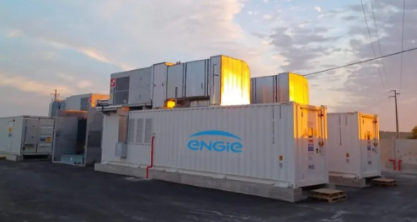
ENGIE has secured a 280 MW standalone battery energy storage system (BESS) project in Gujarat, marking a major milestone in the company’s India portfolio and strengthening its presence in the country’s fast-growing storage segment. The project was awarded under Gujarat Urja Vikas Nigam Limited’s (GUVNL) 2 GW/4 GWh BESS tender, one of India’s largest procurement rounds aimed at enhancing grid resilience and integrating renewable energy.
This will be ENGIE’s first utility-scale battery storage contract in India, aligning with the company’s strategy to expand its clean energy and flexible capacity footprint across the country. Once operational, the installation will provide critical support for peak-hour power demand, renewable energy smoothing, and grid balancing.
The project is scheduled to be commissioned by 2027 and will contribute to Gujarat’s broader efforts to deploy large-scale storage infrastructure that complements the state’s rapidly growing solar and wind capacity. The BESS facility will help ensure reliable energy supply, reduce curtailment of renewable power, and enable better management of intermittency.
GUVNL’s landmark tender has attracted widespread interest from global and domestic players as India ramps up storage deployment to meet its long-term clean energy commitments. The 2 GW/4 GWh tender is designed to create storage capacity that can deliver two-hour discharge and support round-the-clock renewable energy availability.
For ENGIE, the win underscores its long-term commitment to India, where it already operates a sizable renewable energy portfolio. The company noted that the new BESS project will enhance flexibility, support decarbonisation goals, and open new opportunities for the integration of advanced storage technologies in one of the world’s fastest-growing energy markets.
With commissioning targeted for 2027, the project is expected to play a key role in Gujarat’s energy transition plan and serve as a model for future storage-led tenders across India.
