


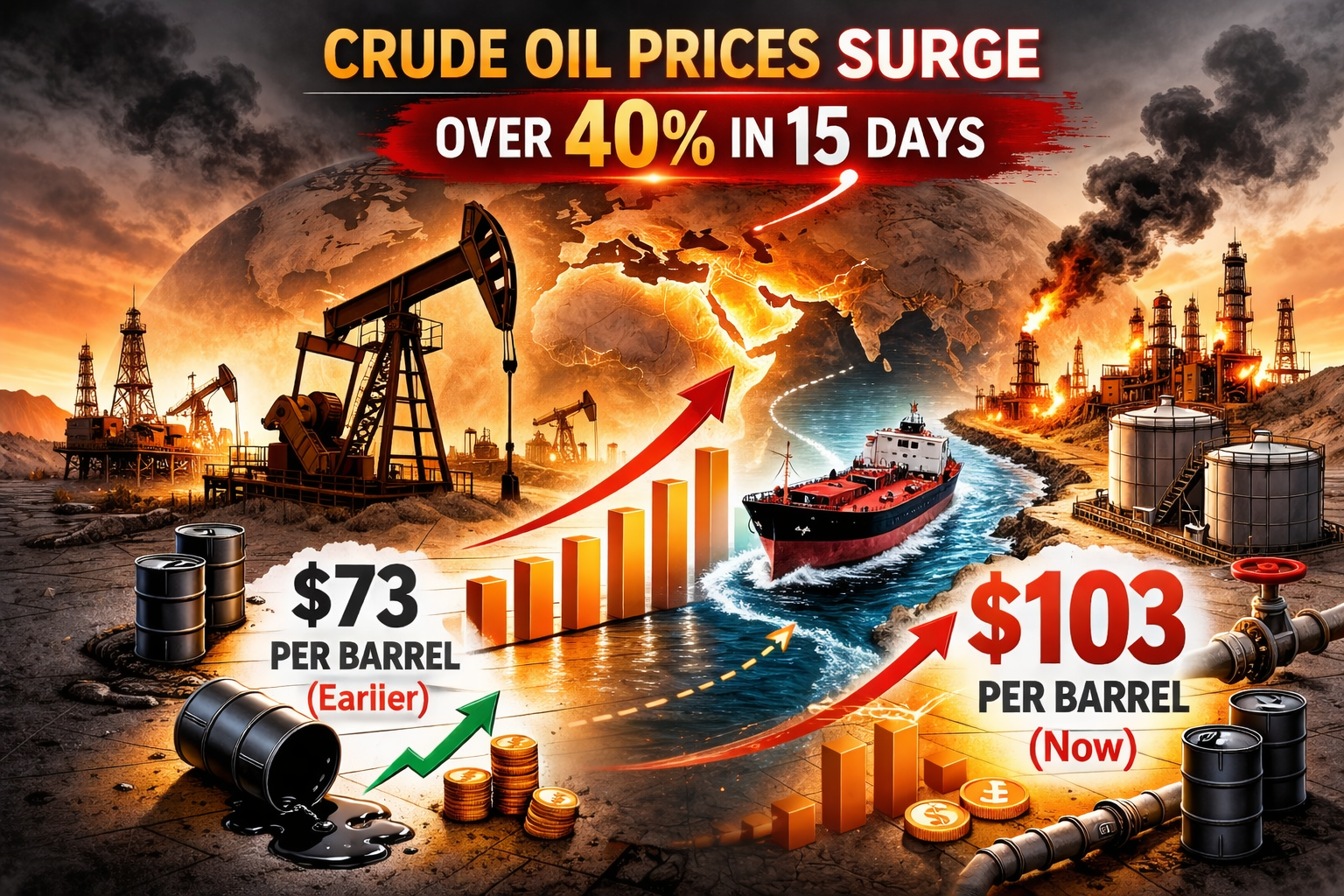
Global crude oil prices have surged by more than 40 per cent within just 15 days as the ongoing conflict involving the United States, Israel and Iran disrupts key energy supply routes, particularly through the strategically vital Strait of Hormuz. The escalating geopolitical tensions have triggered significant volatility in international energy markets, with Asian economies among the most affected.
According to market data, crude oil prices that were trading at around USD 73 per barrel on February 27 climbed sharply to approximately USD 103 per barrel by Saturday. The rise represents an absolute increase of USD 30 per barrel, translating into a surge of about 41.1 per cent over a short period.
The sharp increase in prices follows the outbreak of intense military confrontation beginning February 28, when U.S. and Israeli forces launched wide-ranging direct attacks targeting Iranian military infrastructure and leadership. The strikes reportedly resulted in the death of Iran’s Supreme Leader, Ayatollah Ali Khamenei, further intensifying geopolitical tensions in the region.
Market analysts attribute the spike in crude prices primarily to fears of supply disruptions in the Middle East, particularly around the Strait of Hormuz—one of the world’s most critical maritime chokepoints for oil transportation. Any instability in the region threatens the flow of global oil supplies and has immediate repercussions across international energy markets.
Experts note that crude oil prices are likely to remain sensitive to further developments in the conflict, with geopolitical risk continuing to drive market sentiment and price movements in the coming days.
