

Hyundai Motor India Limited (HMIL) has announced a major milestone in strengthening India’s electric vehicle (EV) ecosystem by enabling access to more than 30,000 EV charging points across the country through its myHyundai app. The integrated platform is among the largest charging networks available through a single digital interface in India and has been developed in collaboration with leading Charge Point Operators (CPOs) and service providers.
The initiative aims to enhance the convenience and accessibility of EV charging infrastructure for users by bringing multiple charging networks together on a unified platform. The myHyundai app will provide EV users with easier access to charging facilities, supporting the wider adoption of electric mobility in India.
Commenting on the development, Mr. Tarun Garg, MD & CEO, Hyundai Motor India Limited (HMIL), said, “With charging infrastructure being a key catalyst for EV adoption in India, HMIL is committed to creating an ecosystem that makes electric mobility practical, convenient and accessible to all. Through the integration of over 30,000 charging points on the myHyundai app, we are empowering EV users with one of India’s largest charging networks accessible through a single platform.”
He further added that the platform is open to EV owners across brands, reflecting HMIL’s commitment to supporting the development of India’s broader EV ecosystem.
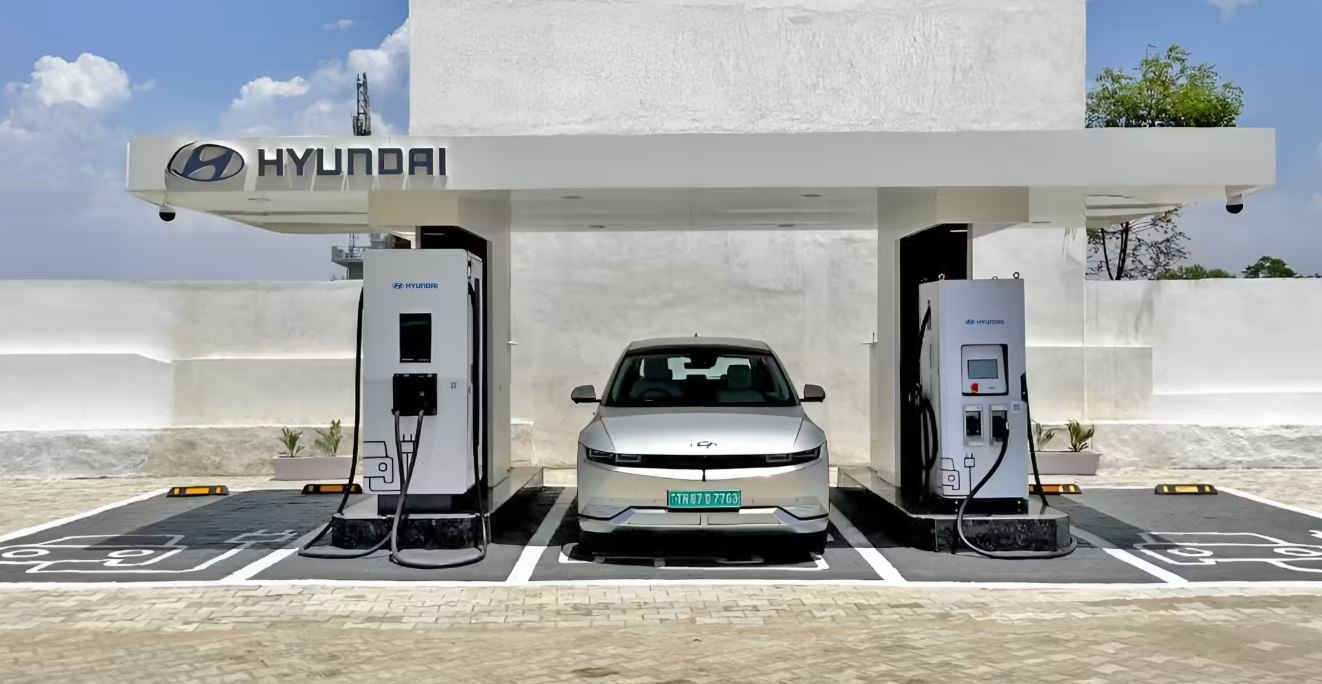
As part of its long-term strategy to strengthen charging infrastructure, HMIL will expand its proprietary DC fast public charging network by more than three times, increasing the number of charging stations from 183 stations currently to 600 stations by 2030. The expansion is aimed at bringing India’s EV charging infrastructure closer to global standards while accelerating the transition towards electric mobility.
HMIL, through its EV charging ecosystem, is accelerating the adoption of electric vehicles while promoting cleaner mobility solutions, thereby contributing to environmental sustainability and reducing transport-related emissions. Its EV charging initiatives have delivered a meaningful environmental impact, with the utilization of its charging stations helping save approximately 3.5 million kg of CO₂ emissions. This highlights HMIL’s commitment to lowering the carbon footprint of transportation and advancing a more sustainable mobility future.
HMIL is planning to enter mass market EV segment by introducing an SUV EV within this financial year.
