



Zero customs duty on the import of goods required for nuclear power projects is expected to accelerate the development of nuclear energy in India while reducing both project costs and the per-unit cost of electricity. The measure is aimed at improving the economic viability of nuclear power projects, particularly those involving foreign cooperation with significant import components.
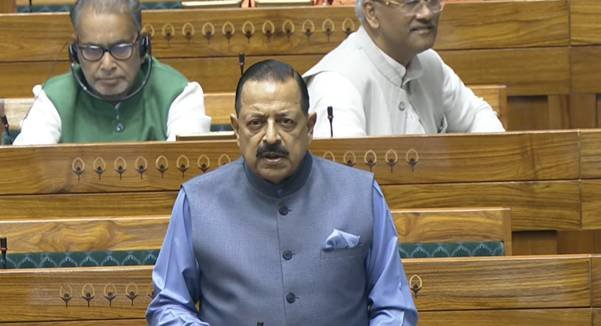
In a written reply to an unstarred question in the Lok Sabha raised by Shri Ramesh Awasthi and Shri Ravi Kishan, Union Minister of State (Independent Charge) for Science & Technology, Earth Sciences, and MoS PMO, Personnel, Public Grievances, Pensions, Atomic Energy and Space, Dr. Jitendra Singh outlined key government initiatives supporting the nuclear energy sector.
The Minister stated that the exemption of customs duty on nuclear fuels and reactor components until 2035 is expected to significantly lower both project development costs and electricity generation costs. This step, he noted, will enhance the economic feasibility of nuclear power projects across the country.
Addressing efforts to strengthen the domestic supply chain for the ten newly approved 700 MW Pressurized Heavy Water Reactor (PHWR) units, Dr. Singh informed that Nuclear Power Corporation of India Limited (NPCIL) has undertaken several initiatives. These include placing bulk orders to ensure supply continuity, expanding the vendor ecosystem with necessary technical support, encouraging indigenous equipment to reduce imports, reserving certain equipment categories for Class-1 local suppliers, and organising vendor meets to promote participation from MSMEs with preferential treatment in bidding processes.
The Minister also highlighted increased funding for research and development at Bhabha Atomic Research Centre (BARC), stating that the enhanced allocation is being directed toward multidisciplinary technology development aimed at achieving self-reliance in nuclear technologies.
Key focus areas for R&D include the development of new research reactors, expansion of isotope production facilities—particularly for cancer treatment—advanced reactor technologies such as Small Modular Reactors (SMRs) and hydrogen production, as well as accelerator technologies, laser-based applications, and advanced materials and manufacturing technologies.
Dr. Singh further informed the House that, at present, there is no proposal to integrate the PM Gati Shakti framework with the construction and logistics planning of upcoming nuclear parks in coastal states.
