


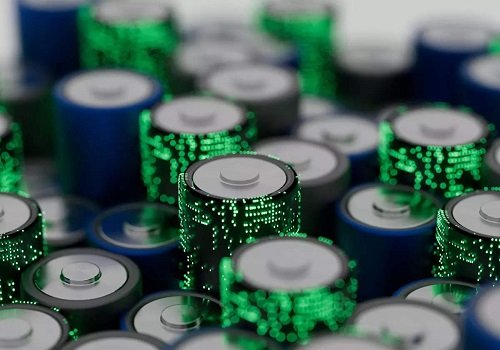
NITI Aayog has recommended that the government expand incentives under the Production-Linked Incentive (PLI) scheme for advanced chemistry cells to encourage manufacturers to use recycled components, reinforcing efforts to build a circular economy for electronic waste and lithium-ion battery scrap.
In a report prepared jointly with The Energy and Resources Institute (TERI), the think tank highlighted that stronger financial support could help scale up recycling of battery materials and reduce India’s dependency on volatile global supply chains. It said advancing circular economy practices for e-waste and battery scrap should be treated as a national priority.
The report urges the expansion of Extended Producer Responsibility (EPR) requirements to include a wider range of valuable metals beyond the current list, which covers gold, copper, iron and aluminium. This broader coverage, along with stricter enforcement, is seen as essential to spur private investment and innovation in recovery and recycling technologies.
For better management of lithium-ion battery waste, NITI Aayog recommended integrating the EPR compliance system with the GST Network to streamline invoice verification and improve traceability. It also proposed publishing mandatory information on the chemical composition of different battery types to support more efficient recycling.
The analysis suggests that enhancing governance, strengthening markets for secondary raw materials, and boosting domestic technology capabilities could help unlock the economic value embedded in India’s e-waste and battery scrap. The report notes that while the annual economic worth of e-waste in India is estimated at around ₹51,000 crore, current recovery rates capture only a small fraction of this potential.
Additionally, the experts recommend updating national quality standards for recycled lithium-ion batteries to include mandatory testing of chemical composition and issuing comprehensive guidelines for the collection, storage, transportation, refurbishment, and recycling of waste batteries.
