


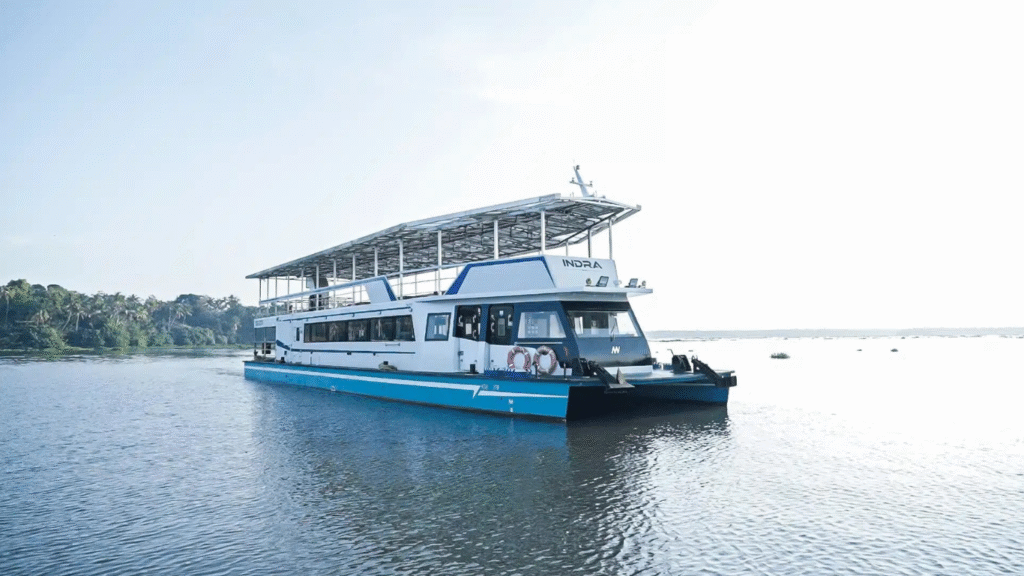
New government guidelines on shipbuilding financial support have led to a reduction in subsidies for electric, solar and other environmentally friendly vessels, raising concerns among industry leaders that this could slow the uptake of green maritime technology in India.
Under the updated Shipbuilding Financial Assistance Scheme (SBFAS), financial aid for building electric and hybrid boats has been cut from 20 per cent to 15 per cent of the vessel’s cost. This change applies especially to smaller vessels typically used on inland waterways and coastal routes, which are generally valued between ₹20 crore and ₹100 crore. With the effective subsidy now aligned with that for conventional diesel-powered vessels, stakeholders fear that the economic appeal of cleaner options will weaken.
According to industry representatives, this reduction erases the earlier “green premium” that had helped electric boats compete with cheaper fossil fuel vessels. The Shipyards Association of India has indicated that a higher rate of financial support for eco-friendly boats would have significantly improved their commercial viability. Without additional incentives, shipowners may be less inclined to place orders for electric or hybrid vessels.
Although the guidelines do classify electric and hybrid boats crafts as “specialised ships,” vessels costing less than ₹100 crore still receive only the base 15 per cent assistance. In contrast, larger or truly specialised vessels are eligible for a higher subsidy on portions of their cost. Stakeholders say this structure effectively nullifies the intended preferential treatment for small green boats.
Critics also point to broader implications for India’s inland waterways, where small electric and hybrid vessels are considered key to decarbonising passenger and cargo transport. They argue that reducing support at this stage could hinder the development of a more sustainable fleet just as the shipbuilding sector seeks to modernise and align with climate commitments.
The government’s overall shipbuilding support framework has been expanded under a larger policy push to strengthen domestic capacity through multiple schemes operating until 2036, with tiered financial assistance based on vessel type and size. However, the recent cut in the subsidy rate for electric boats is seen by some industry players as a step back for green maritime technology adoption.
